
Your cart is currently empty!
Painting With Aphantasia
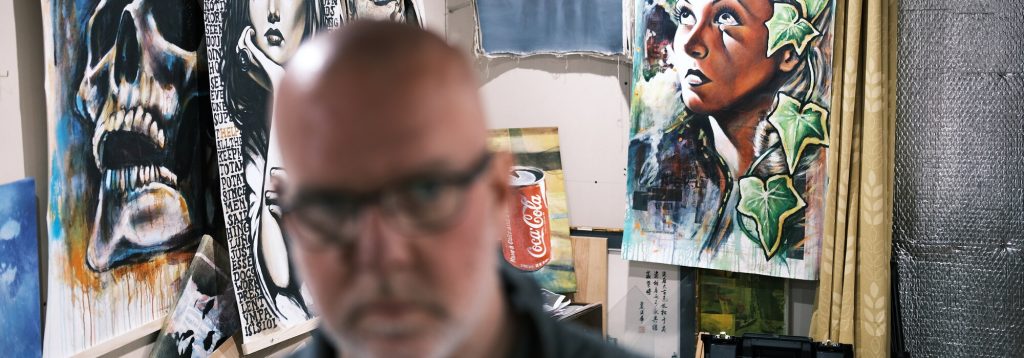
Aphantasia has shaped the way I work. I do not have a reliable mind’s eye. I can think of a dragon eating a zombie, but I cannot see it clearly enough in my head to transfer that imagined image onto paper or canvas.
That is not a poetic exaggeration. The inner image, if there is one at all, is fleeting, scratchy and colourless. I can know what something is meant to be, but I cannot inspect it internally. I cannot rotate it, light it, dress it, or copy it in the way people often imagine artists doing when they talk about drawing from imagination.
That ruled out certain childhood fantasies about being a comic artist in the conventional sense. It also pushed me toward reference-led work. I need something external: a photograph, a model, an object, a generated reference, an accident on the canvas, something I can respond to in the world rather than retrieve from a clear inner picture.
From the outside, that may not look especially unusual. Plenty of painters work from references. For me, though, it is not just a preference. It is the structure that makes the work possible. I need to get something real, or at least visible, onto paper or canvas. Once it is there, I can adjust it, disrupt it, intensify it, simplify it, or push it somewhere else.
Colour works the same way. I may know which paints to reach for and I may know, technically, how to mix a particular shade. But the first time I really see the colour is when it appears on the palette or the canvas. That physical appearance matters. It is not the execution of an image already fully formed in my head; it is part of the discovery.
That may be one reason vibrant colour matters so much to me. I do not see that colour internally, so making it physically is a genuine event. It gives me something my mind does not supply by itself. Colour is not just decoration; it is feedback, stimulus, pleasure, and sometimes a shove in a direction I did not expect.
I do not want simply to copy photographs. There are artists who do photorealistic reproduction brilliantly, but that is not what I am after. If I only copied the reference, the work would not give me enough novelty. It would become too much like transcription, and I would lose the thing that keeps the process alive for me.
So the method has to include chaos. I need accidents, disruption, texture, and surprise because those things create novelty while I am working. A mark behaves oddly, a colour does something unexpected, a surface pushes back, and suddenly there is something to respond to. The painting starts giving me information.
This has made the work quite realist in some ways. I am not a very lyrical painter and I do not think heavily in symbolism. If I want to represent an emotion, I am likely to paint a face carrying that emotion, using a reference with that expression. If I want to say something, I tend to say it rather than hide it behind a complicated symbolic code.
The process has grown around my constraints, but the constraints are not only limitations. They are part of the shape of the work. Aphantasia forces me to collaborate with the outside world, with references, with materials, and with whatever unexpected thing happens once paint starts behaving like paint.
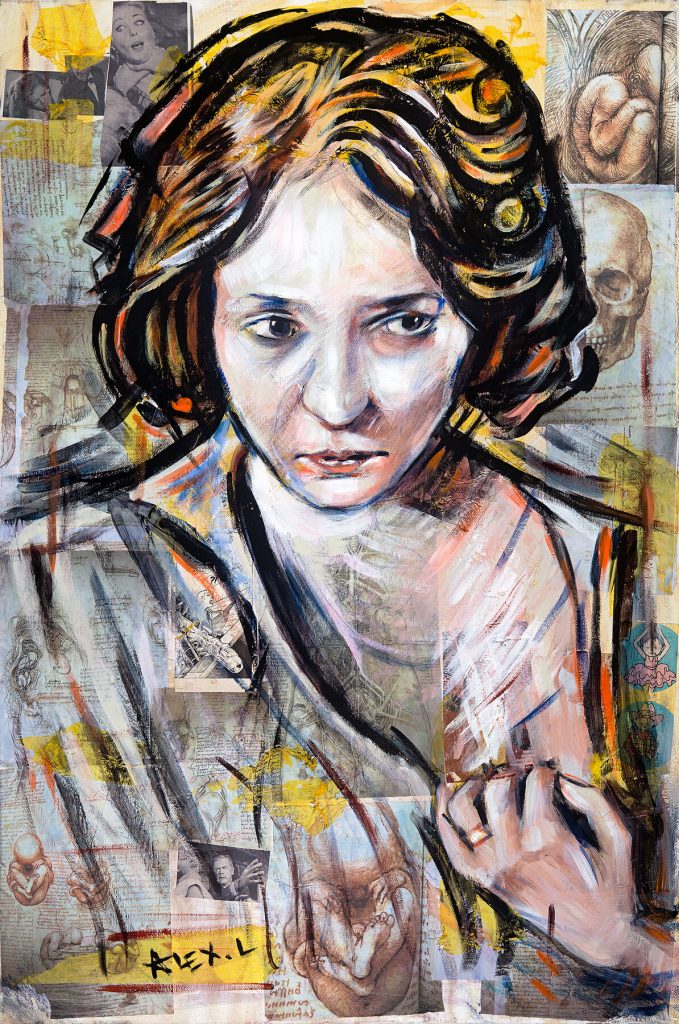
This is part of a short series drawn from a longer interview about making art, process, aphantasia, mental health practice, and finding a more honest way to share the work.