
Your basket is currently empty!
Sharing Without Turning It Into a Performance
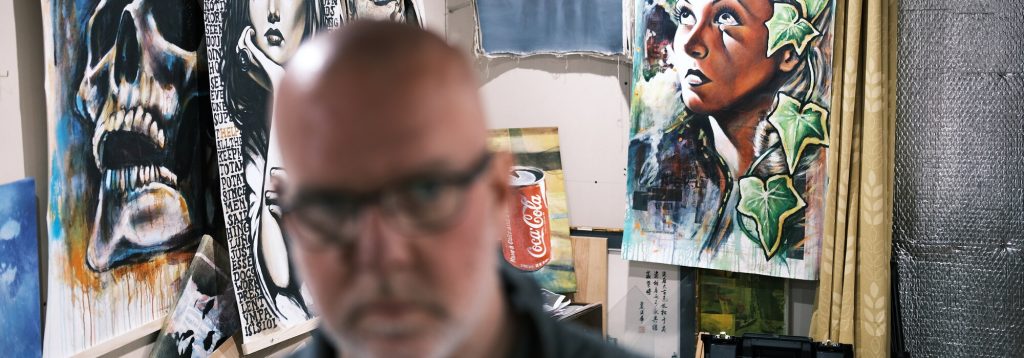
I enjoy showing the work. I like knowing that someone else has experienced it. Art gives me a way to connect with people that does not always require the usual social machinery.
That matters to me as an autistic person. Connection can be harder than it appears from the outside, and ordinary social machinery can be confusing, tiring, or just weirdly overcomplicated. A painting can create a different route. Someone can meet the work first, respond to it, and then a conversation can begin from there.
At the same time, I would still make art if nobody saw it. Quite a lot of work is rolled up in the studio. Some has been shared on Instagram, some has been seen by family or friends, and some has barely been seen by anyone else at all. Not because I am trying to hide it, but because showing it was not always the point at the time.
That is the tension. I take the whole-process idea seriously, and sharing should be part of the end-to-end practice. But I have not yet trained myself to enjoy every part of that process. Selling art, promoting myself, building a customer base, building a follower base, talking about the work in public: all of that can feel difficult, unpleasant, and emotionally confusing.
Even taking a quick phone photo and sharing it can produce more anxiety than seems reasonable from the outside. It is not simply laziness or lack of ambition. It is friction: putting myself into channels and contexts I cannot control, where the response is unknowable and the rules are often unstated.
This website, the newsletter, the podcast, and the social posts are all attempts to solve that problem in a more tolerable way. Not by inventing a glossy artist-brand performance, because that would be tedious as hell, but by finding a way to present the work and the thinking around it honestly, with as little unnecessary friction as possible.
The podcast matters partly because it gives me control. It lets me present the parts of myself I am comfortable presenting, in a form that has context and room to breathe. It is not directly a painting-sales machine, and I do not want it to become one, but it carries a lot of who I am and why the work exists.
As an autistic person, I find it hard to understand how other people see me in any meaningful way. The way I view the world is not the same as the way the world sees me, or the work, or anything else. That makes performance-based self-promotion feel particularly false. I do not want to pretend to be a genius, a style icon, a guru, or a trailblazer.
What I want is simpler. I want to make things that matter to me, and I want some of those things to find the people they might matter to as well. I want to put something honest into the world that some people can take something positive from.
Mostly, I want to bring a bit of joy into people’s lives by doing something that brings joy to me. That sounds almost embarrassingly straightforward, but it is probably the truest version of the whole thing.
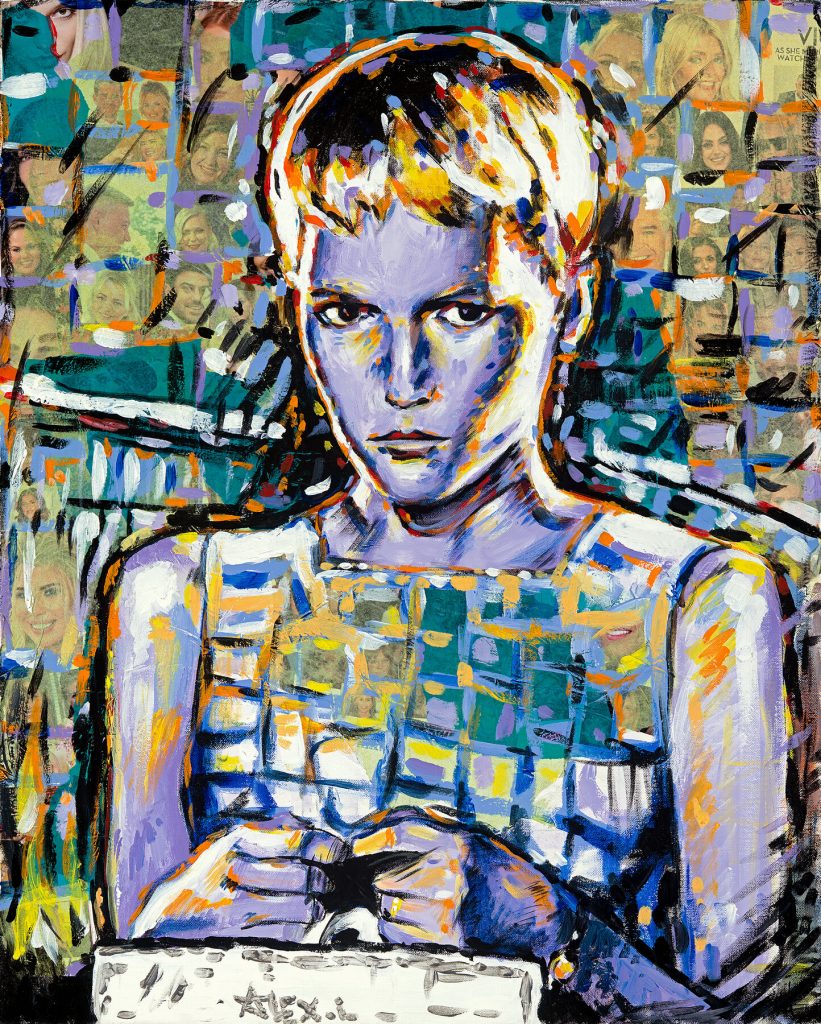
This is part of a short series drawn from a longer interview about making art, process, aphantasia, mental health practice, and finding a more honest way to share the work.
Leave a Reply
You must be logged in to post a comment.